


Sculptra in St. Catharines
Collagen biostimulator for gradual volume restoration in the cheeks, temples, and jawline.
First time with Sculptra or new to Contour Medical?
Book a FREE consultation with Cassie to build your custom plan.
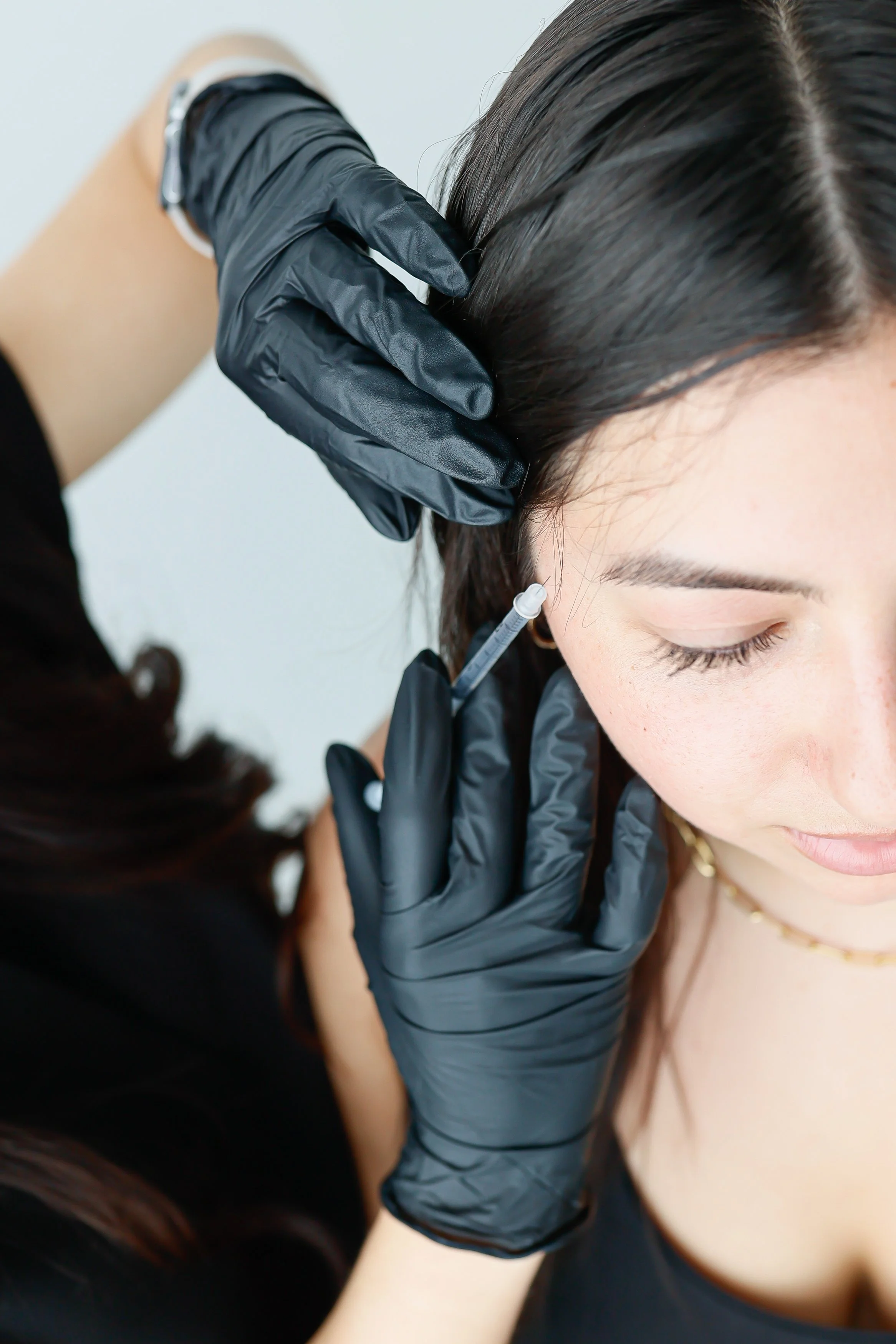
What Sculptra Does
Sculptra isn't filler. It's a collagen biostimulator made from poly-L-lactic acid. Instead of adding volume directly, it triggers your body to rebuild its own collagen in the areas where you've lost it. The result develops over months, not minutes, and can last up to two years.
Traditional fillers place a gel under the skin for immediate volume. Sculptra creates a scaffold that signals your body to produce new collagen around it. The volume you get is your own tissue, not a product that's slowly dissolving.
Is Sculptra Right For You?
The difference between lines and volume loss matters, because they're different problems. Botox® handles lines. If the issue is that your cheeks look flatter, your temples hollowed out, or the structure of your face just changed, that's volume. And Sculptra is built for that.
What sets it apart from traditional filler is the pace. Filler gives you instant volume. Sculptra works over three to six months by stimulating your own collagen production. The result comes in gradually enough that nobody says "you got work done." They say "you look good."
It also lasts longer. Traditional fillers break down in six to eighteen months. Sculptra results can hold for up to two years because the volume is your own collagen, not a product that's slowly dissolving.
How Sculptra Works at Contour Medical
Sculptra requires a different approach than traditional filler. Instead of placing volume where you want it to stay, it's placed where it will trigger collagen production over time. Where it goes on day one determines how your face looks six months from now. Placement precision is everything.
01. Your consultation.
You'll get a full assessment of volume loss patterns, skin quality, and structural changes. If Sculptra is the right fit, you'll know why. If hyaluronic acid filler would serve you better, you'll hear that instead.
02. The treatment.
Sculptra is injected strategically into areas of volume loss. It creates a scaffold beneath the skin that signals your body to produce new collagen around it. Each session takes about 30 to 45 minutes.
03. The series.
This is not a one-and-done treatment. Most clients need two to three sessions spaced four to six weeks apart for optimal results. The number of sessions depends on how much volume you've lost.
04. The 5-5-5 rule.
After each session, you massage the treated areas for five minutes, five times a day, for five days. This distributes the product evenly and helps prevent nodules. I'll walk you through exactly how to do it before you leave.
05. Recovery and results.
You'll notice some immediate volume from the injection fluid itself. This is temporary and subsides within a few days. Real improvement starts around the three-month mark, with full results developing over three to six months. Results last up to two years.

Areas of the Face You Can Treat With Sculptra

Cheeks and Midface
The most common area. This is where volume loss shows first and where collagen restoration has the most visible impact.

Temples
Hollow temples age the face faster than most people expect. Restoring volume here changes the entire upper-face silhouette.

Chin
Volume loss in the chin shortens the lower face and weakens the profile. Restoring structure here improves balance and definition.


Nasolabial Fold Area
The deeper folds between your nose and mouth often result from midface volume loss higher up. Sculptra addresses the cause, not just the crease.
Marionette Lines
The lines running from the corners of your mouth downward are driven by volume loss in the midface and chin. Sculptra rebuilds the support above and around them.

Jawline
Collagen loss along the jawline contributes to sagging and a less defined profile. Sculptra rebuilds the structural support.

Preauricular Area
The hollow in front of the ears is one of the more subtle signs of volume loss, but correcting it restores a smoother transition between the cheek and ear.
Sculptra vs. Filler: Which One Do You Actually Need?
While both are used to restore volume, they function differently.
Hyaluronic acid fillers (Juvederm, Restylane, Revanesse) add volume immediately. You see the result before you leave the chair. They last six to eighteen months depending on the product and placement. They're the right choice when you want precise definition in a specific area, like lips, chin, or under-eyes.
Sculptra works on a completely different timeline. There's no instant result. Instead, it stimulates your body to produce collagen gradually over months, restoring volume from the inside out. Results can last up to two years and we typically don’t treat lips or under eyes. These areas are reserved for other treatments, like Platelet-Rich Plasma (PRP) or Dermal Fillers.
Neither is "better." They serve different goals, and are often used in combination with one another. Filler for immediate definition in targeted spots and Sculptra for broader, longer-lasting volume restoration across the midface. Sculptra improves the skin quality, whereas, dermal fillers simply restore lost volume. Think of Sculptra as a fertilizer for your face — helping to gradually improve skin elasticity and firmness.
The right choice depends on your goals, your timeline, and what your face actually needs.

-
Traditional dermal fillers add volume directly by placing a gel-like substance under the skin. Sculptra works differently. It's made from poly-L-lactic acid, which has been used in medicine for decades, and it stimulates your body to produce its own collagen. The results develop gradually over three to six months and can last up to two years.
-
Most clients need two to three sessions spaced four to six weeks apart. The exact number depends on your degree of volume loss. Your consultation includes a treatment plan based on what your face actually needs.
-
You'll notice gradual improvement starting around the three-month mark, with full results developing over three to six months. The beauty of this timeline is that the change happens so naturally that nobody notices a sudden difference. It just looks like you.
-
Yes, and they can be complementary. Some clients use hyaluronic acid fillers for immediate, precise definition in specific areas and Sculptra for broader volume restoration across the midface and cheeks. Your consultation covers which combination makes sense for you.
Frequently Asked Questions About Sculptra
Book Your Consultation
Not sure whether you need Sculptra, filler, or both? That's what your FREE consultation is for.